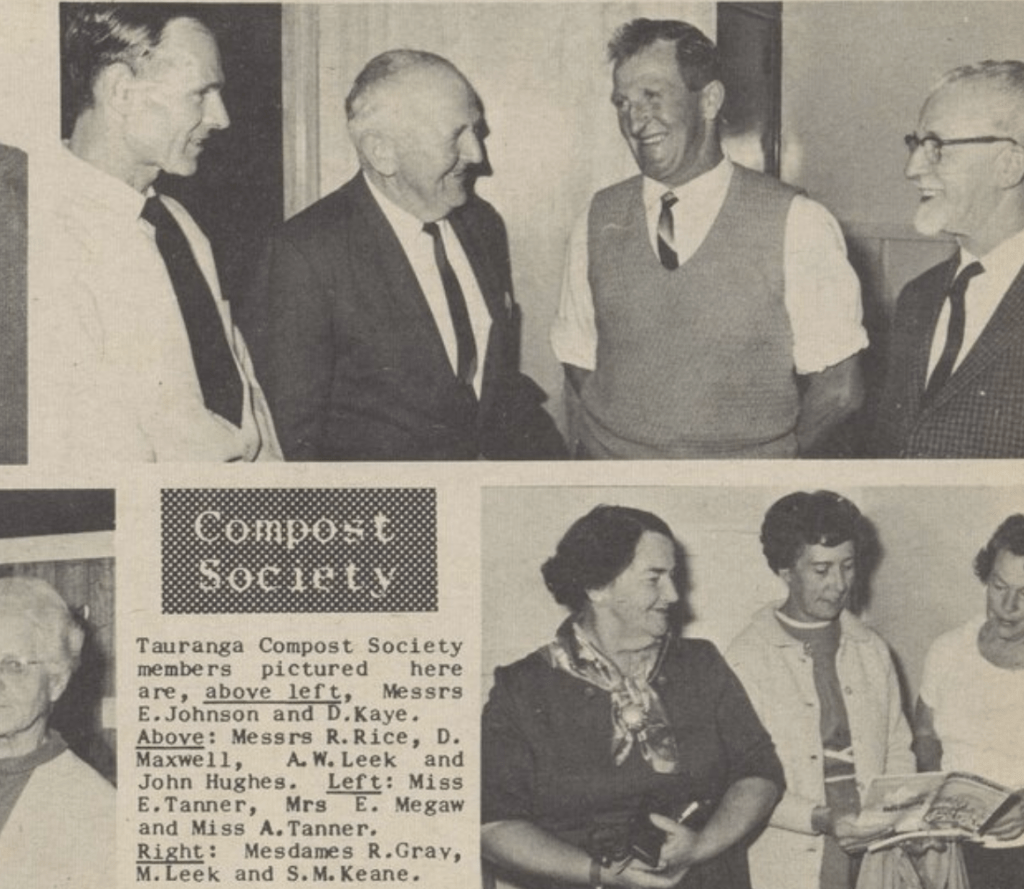
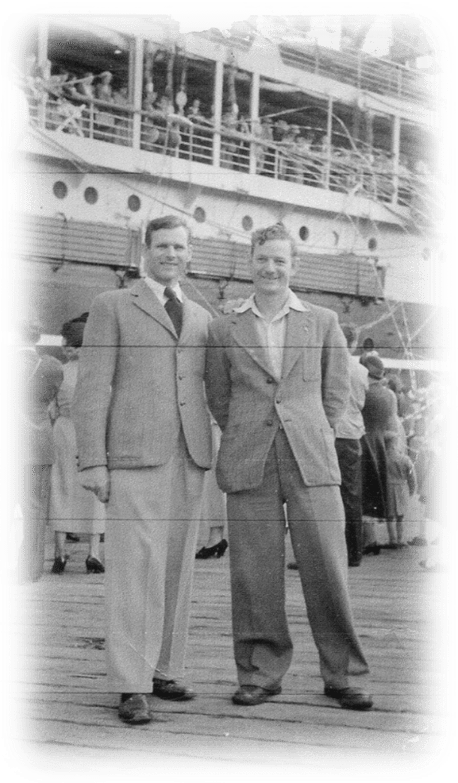
Above is a photo shows my father, Robert Rice, at a compost society meeting in 1968. He looks healthy and alert despite having undergone serious brain surgery five years earlier, with a post op prognosis of 12 months to live. The family narrative created by my mother, Juliet, was that Robert became a burden on the family after his surgery. But this photo supports my version of events: that he continued to provide for the family financially and emotionally for more than ten years after the operation and helped moderate my mother’s narcissistic traits, which emerged more strongly after his death in 1974. See Juliet Rice page.
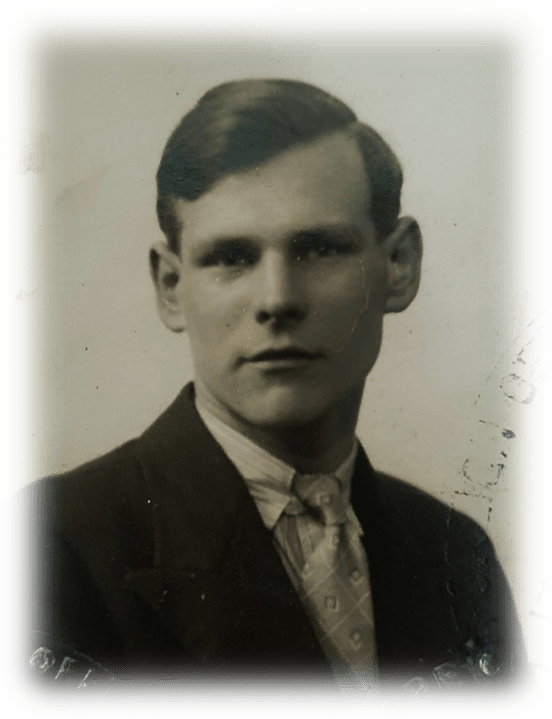
Robert’s Early Years in Bolton
Robert’s early life was rooted in the modest stability of Bolton, Lancashire. He was born into an Irish Catholic family at 119 Auburn Street—a house that had been in his family for generations. The 1901 census records his grandmother Elizabeth (aged 53), his father William (a 19‑year‑old carpenter), and his sisters, Margaret and Elizabeth. Further back, the 1881 census identifies his grandfather, also named William, as a stonemason from County Wicklow, Ireland, born around 1845. Robert’s grandfather had likely immigrated to England to escape the hardships of the Irish Potato Famine (1845–1852).
In his early years, Robert was an avid swimmer, an enthusiastic Boy Scout, and an adventurous hiker. For work and income Robert trained to be a carpenter. At 19, he obtained a British passport and embarked on extensive travels throughout Europe in the summers of 1936 to 1939—visiting countries such as Germany, Switzerland, Hungary, Romania, Poland, and the Netherlands. These formative experiences broadened his horizons and instilled in him a sense of determination and resilience.
The outbreak of World War II, however, altered the course of his life. Robert’s entry into the war was delayed by the death of his father in 1939, a loss recorded in that year’s census where he was seen living with his mother, Susan (aged 51), his sisters Annie and Ada, and his brother Charles (20), who was then working as an apprentice joiner. In September 1941, Robert joined the Royal Marines and served in the engineer division. During his service, he sailed on vessels including HMS Victory III (1941), HMS Proserpine (1944), and HMS Pyramus (1945). His wartime service even took him as far as India, and he once took a day trip to the Taj Mahal.
Robert was discharged from the Royal Marines in April 1946, a year after the war ended in Europe. Deeply affected by his experiences, he developed a profound dislike for war.
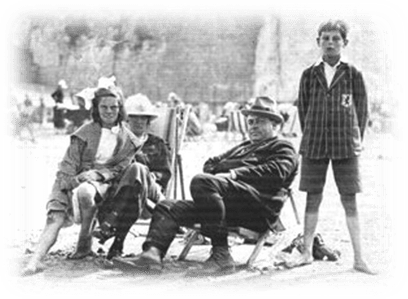
Figure 3 – Thelma, Maude, Lionel, Lionel Jr ~ 1925
Juliet’s Early Life
Juliet was born on October 18, 1928, to Maude and Lionel Staniland. Maude had given birth to six other children before having Juliet, Lionel Jr., Thelma, Ilean, Patrick, Gerard, and Brian. Lionel and Maude married in July 1907, when Lionel was only 20 years old, and Maud was 22. Lionel worked in the liquor retail industry for most of his life. Census records from 1901 to 1939 reveal that he began working as a barman at the age of 14 (though he claimed to be 19) and later managed hotels for the next 40 years. While Juliet later claimed that her father owned pubs in London, census records show him only in the role of a hotel manager, not an owner.
In 1925, three years before Juliet was born, Lionel had an intimate relationship with Eleanor Griffith, with whom he fathered a child. By 1939, census records show Lionel and Eleanor as a married couple living at 180 Lyndhurst Drive in Emerson Park, London, with their 14-year-old son, Ronald Staniland. Meanwhile, Maud was recorded as residing at 38 Elmbourne Road with Juliet and her sister, Gertrude Paddon—likely the “Auntie Minnie” referenced in later family stories.
From 1930 to 1956, electoral records indicate that Maud continued to live at 38 Elmbourne Road. She did so without Lionel Sr. but with Lionel Jr. (her son), his wife Kathleen, and several boarders—sometimes as many as four adults at one time. It is widely assumed that Lionel left Maud and his children around 1929–1930. Juliet later confided in her own children that whenever her estranged father visited, she would hide, even though he provided financial support during those visits. She also described her father as a gambler, a drinker, and a womanizer—an opinion likely shaped by her mother and siblings, who resented his abandonment of Maud for a younger woman.
Later in life, Juliet showed an aversion to her children marrying young, a stance likely influenced by her mother’s regret over marrying Lionel when he was only 20 years old. She also shared with her children that she deeply disliked her sister-in-law, Kathleen, who lived with them at Elmbourne Road. This animosity boiled over one day when Juliet slapped Kathleen. In response, her mother, siblings, or perhaps Kathleen herself may have called Juliet a “skitzo,” referring to schizophrenia. Years later, Juliet used the same term against her own son, Ian, when he displayed anger and aggression.
During World War II, when Juliet was between the ages of 11 and 16, she was evacuated under Operation Pied Piper to escape the worst of the London Blitz. She later recounted to her children memories of taking shelter in underground stations during air raids and described how their house was partially damaged by bombing. The hardships of war were compounded by personal loss; her brother Gerard, a conscientious objector, not only spent time in jail but was also mistreated—a further trauma that shaped Juliet’s inner life. She also lost her brother Brian, who was a pilot of a Lancaster bomber that never returned from a raid over Germany in 1943.
At the age of 19, in March 1948, Juliet emigrated to Queensland, Australia, where she trained as a nurse at the Royal Brisbane Hospital. Before leaving Britain, she later confided in her children that she had an affair with a much older married man.
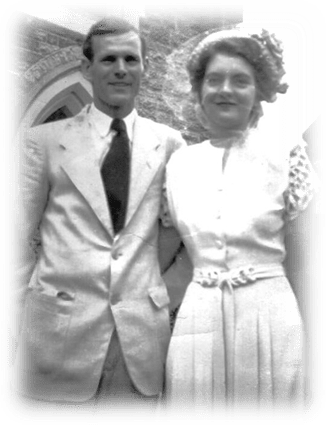
Figure 4 – Robert and Juliet ~ 1951
The Marriage
Robert and Juliet met in Brisbane, Queensland, where Robert was employed as a builder, living in Ashgrove, and Juliet was a trainee nurse at the Royal Brisbane Hospital. The only obvious issue between them was that Robert was a devout Catholic, while Juliet had no particular religious affiliation. To overcome this, Juliet agreed to formally convert to Catholicism by attending the required initiation training.
However, Juliet’s conversion to Catholicism for the sake of marrying Robert in 1950 was short-lived. Soon after their wedding, she rejected the faith she had agreed to adopt in order to unify their marriage. This rejection was not merely a change of belief—it created a fundamental rift between them. Robert’s faith, a central element of his life, was no longer shared by his wife or, eventually, by their children.
Adding to this strain was the involvement of Robert’s family early in their marriage. Around the time of their son John’s birth—or shortly afterward—in 1952, Robert’s brother Charlie visited from England. Charlie, also a carpenter, was well-acquainted with the trade and shared a close bond with Robert. At that time, the family was living in a caravan in Ashgrove, and Charlie slept in the annex. Every Sunday, Robert and Charlie attended church together and spent much of their free time together.
As Juliet later shared with her children, this routine greatly annoyed her, as she saw it as a challenge to her relationship with Robert. In the end, she ordered Charlie to leave, and he promptly returned to England, never again seeing his brother.
Most of Juliet and Robert’s children were born in either Brisbane or Southport on the Gold Coast. Robert built a family home there and co-owned a business with a Dutch immigrant. However, Juliet was deeply suspicious of Robert’s business partner, and they eventually fell out over disputes regarding the business profits—an argument exacerbated by Juliet’s lack of trust.
 RICE MUSINGS