1963 Children’s Party at Greerton
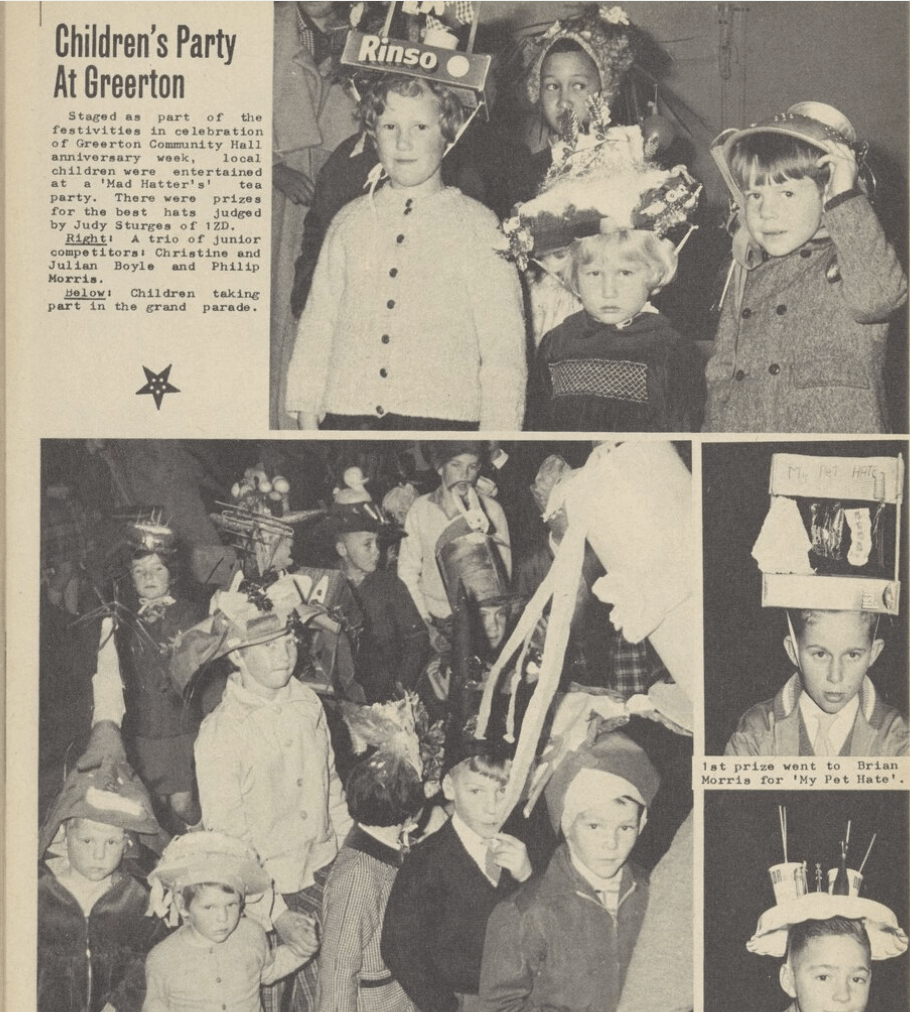
In front of bottom photo from Left David, Suzanne, Maureen , ? , ? Ian 1963

In the middle there, from left, John with tall hat, Ian, David, Suzanne, Maureen, 1963

Figure 1 – Rice Children~ 1964?
From left, Gerard, David , Ian, Suzanne, Richard, John, Maureen
The Family Members are:
Parents
Robert – father,
Juliet– mother
Children
Oldest two – John and Maureen
Middle Three – Ian, Gerard, and David
Youngest Two, Suzanne and Richard
A New Beginning, A New Struggle

The Wanganella
In August 1961, the Rice family—longtime residents of Queensland’s subtropical Gold Coast—decided to leave the country. According to Juliet’s narrative, the family’s departure was prompted by an economic slowdown. However, as previously recorded, other tensions also contributed to this decision. They boarded the ship Wanganella in Sydney, bound for Wellington. Their arrival in New Zealand was marked by a freezing, blustery day—a stark contrast to the warmth and humidity they had known for the previous 15 years.
At the time of boarding the Wanganella, 33-year-old Juliet was six months pregnant with her youngest child, Richard. Alongside her were her husband Robert, aged 45, and their children: John (10), Maureen (8), Ian (6), Gerard (5), David (3), and Suzanne (1). The family also brought their car, and a trailer filled with all their possessions—a tangible representation of both hope and upheaval as they embarked on a new chapter far from the familiar landscapes of Australia.
Upon arrival in New Zealand, the family ultimately chose Tauranga as their new hometown. They purchased a plot of land at 30 Mitchell Street in the suburb of Tauranga—a decision that would come to symbolize both their aspirations and the challenges ahead. Robert, ever the builder, immediately set about designing a new family home. Drawing upon the successful designs he had implemented in Australia; he crafted plans for a house that featured two large patios and an elevated foundation (approximately one meter above ground level). In a nod to his Bolton roots, Robert selected red brick for the exterior walls and used charcoal mortar—a subtle yet powerful homage to the house he had known in his youth.
Before the house could be constructed, however, Robert built a large shed on the property. This structure served as the family’s temporary home during the lengthy construction process that began in early 1962. The shed, modest and unadorned, stood in contrast to the ambitious design of the house Robert envisioned—a design that would ultimately reflect not only his architectural skills but also his deep desire to recreate a sense of stability and belonging for his family in a new country.
Robert’s construction efforts were meticulous. He personally poured the concrete foundations and exterior walls before proceeding to erect the timber framing and roof structure. Every brick laid and every beam installed was an attempt to embed his memories and identity into this new life in Tauranga. However, the progress was soon tragically interrupted.
Around the time Robert was finishing the roof, an incident occurred that changed everything. One day, while on the roof, Robert descended abruptly. He complained to Juliet of an intense headache and dizziness—a moment so striking that even the children, who had been playing, immediately fell silent, their faces etched with concern. That day marked the beginning of the end for the man who had so diligently built a future for his family.
Robert was promptly taken to Auckland Hospital, where he was diagnosed with a brain tumour. The treatment that followed included a major surgical operation to remove the tumour, followed by a course of radiation therapy. The doctors informed the family that the tumour was aggressively malignant and gave him a prognosis of only 12 months to live. In a cruel twist of fate, the illness that struck in the midst of building their dream home would soon come to redefine every aspect of their lives.
Following Robert’s abrupt departure from the construction site, the family continued living in the shed. The plan was to eventually hire another builder to complete the house. By 1964, after much persistence and adjustment, the house was finished. The completion of the house brought a measure of relief to the family—a long-awaited return to stability. Although Robert returned to work after his surgery, he remained on medication to prevent epileptic fits, a lingering reminder of his illness and the fragility of his health.
Faced with the grim prognosis for her husband, Juliet was determined to prolong Robert’s life. In her fervour, she delved into extensive research on natural cancer remedies. This quest led her to introduce the family to a new diet—a regimen focused on raw vegetables and whole grains. Traditional staples like white sugar and refined flour were replaced with their less processed counterparts: raw sugar and wholemeal flour. Juliet began baking homemade bread and cakes, using honey instead of sugar whenever possible.
Remarkably, Robert lived for another 12 years beyond the initial 12-month prognosis. The new diet was also imposed on the children, which made them feel uncomfortable around their peers when eating their lunches at school and when friends came to visit. While Juliet took credit for Robert’s extended life, others felt it was Robert’s faith and his desire to protect his children that drove him to persevere. It could have also been just luck; the tumour was removed as much as possible, and radiation treatment may have eradicated most of what remained.
After his operation, Robert continued to be a caring and loving father. Despite some restrictions, he provided guidance, support, and leadership for his family. His passion for classical music was well known; he often played it on the radio while working at home, crafting furniture, and undertaking various household repairs.
The Rice family home at 30 Mitchell Street was more than just a physical structure—it was the arena where daily life, familial duties, and deep-seated conflicts played out. The seven children naturally grouped themselves by age. The eldest siblings, John and Maureen, who were only two years apart, had both attended Catholic school in Australia before the family’s move to New Zealand. The middle group consisted of Ian, Gerard, and David, each roughly a year apart, while the youngest children, Suzanne and Richard, were separated by just one year.
Juliet, who obtained her driver’s license around 1965, began working as a district nurse. Her career advanced through roles in outpatient specialist clinics and eventually in the psychiatric ward, where she worked until her retirement in the early 1990s. Meanwhile, Robert worked as a porter at Tauranga Hospital before finding work at HT Plywood and Gate Pa Joinery until late 1973. Their combined income, which was likely more than what a well-paid man might earn at the time, allowed the family to raise seven children with relative material comfort despite the emotional turbulence at home.
The routines of daily life were strictly enforced. Birthdays and Christmases were celebrated with generous presents—occasions when a semblance of joy temporarily overshadowed the underlying tensions. On weekdays, Robert would rise early, have breakfast, and leave for work. On weekends and holidays, however, he remained at home, diligently working on projects ranging from making furniture and building fences to carrying out repairs, all the while keeping a watchful eye on the children as they played around him. The soft strains of classical music on the radio provided a backdrop to his labour and his moments of quiet reflection.
Juliet imposed a strict regimen on the children. Each child was assigned household chores that had to be completed before they could leave for school. On weekends, additional chores were added, and only after these tasks were completed could the children participate in sports or simply play freely. Richard recalled that he had begun hanging out the washing at around four years old by standing on a fruit box. In the evenings, after returning from work, Juliet would prepare dinner—a meal that was devoured quickly by her ever-hungry brood. As the children grew older and their appetites increased, Juliet eventually locked the pantry to prevent after-school snacks from depleting the food supply. This early exposure to strict control and enforced routine would have lasting implications for each of them.
 RICE MUSINGS